


How to Unblock a Drain Pipe with Clog Remover Gel Safely and Effectively
A slow drain can turn a simple shower, sink rinse, or kitchen cleanup into a frustrating mess. The good news is that many everyday blockages can be cleared at home with the right clog remover gel, a little patience, and careful handling.
Clog remover gel works best on common buildup near the drain opening or inside the trap, such as hair, soap scum, grease, and food residue. It is not a fix for broken pipes, tree roots, or a main sewer line problem, but it can be a practical first step for many household clogs.

Start by identifying the type of clog
Before pouring anything down the drain, take a minute to understand what may be causing the blockage. This helps you choose the right product and avoid making the problem worse.
Common causes include:
Hair
Hair is one of the main causes of bathroom sink, tub, and shower clogs. It binds with soap residue and forms a dense mat.
Soap scum
Bar soap, minerals in water, and body oils can collect along pipe walls over time.
Grease and cooking oil
Grease may go down as a liquid, then cool and harden inside kitchen pipes.
Food scraps
Coffee grounds, rice, pasta, eggshells, and peels can clump together, even in homes with garbage disposals.
Foreign objects
Cotton swabs, wipes, dental floss, and small caps do not break down well and may need mechanical removal.
If several drains are backing up at once, or if water rises in a shower when a toilet flushes, stop and call a plumber. That points to a deeper drainage issue.
Choose the right clog remover gel
Not all drain gels are the same. Read the front label and the use instructions before buying.
Look for a gel that matches the drain and clog type:
Drain type | What to look for |
Bathroom sink or shower | A formula labeled for hair and soap scum |
Kitchen sink | A formula labeled for grease and food buildup |
Garbage disposal drain | A product marked safe for disposals |
Septic system | A product marked septic-safe |
Older plumbing | A gentler product labeled safe for your pipe material |
Use clog remover gel safely
Chemical drain cleaners can irritate skin, eyes, and lungs. Treat them with care, even if the bottle looks simple to use.
Before you begin:
Put on rubber gloves and safety glasses
Open a nearby window or turn on the bathroom fan
Keep children and pets away from the area
Remove drain covers or strainers if the label allows it
Read the product label from start to finish
Check whether the product is safe for your sink, tub, pipes, disposal, or septic system
Never lean directly over the drain while pouring. If the drain already contains another chemical cleaner, do not add gel. Wait, flush only if the label says it is safe, or call a professional.

Follow these steps to apply the gel
1. Remove visible debris
Take out the drain stopper, strainer, or hair catcher if you can do so easily. Pull out visible hair or debris with a disposable paper towel or a plastic drain tool.
Do not reach deep into the drain with bare fingers. Sharp metal edges or trapped debris can cut skin.
2. Clear excess standing water if needed
Some gels are designed to sink through standing water, but others work best when the drain opening is not completely covered. Follow the label.
If the sink or tub is full, remove some water with a cup or small bucket. Do not bail out water that already contains drain cleaner unless the label gives clear disposal instructions.
3. Pour the recommended amount slowly
Measure the amount listed on the bottle. More is not always better. Too much gel can sit in the pipe longer than intended and may increase the risk of damage or fumes.
Pour slowly into the drain opening. Keep your face back and avoid splashing.
4. Let the gel sit for the correct time
Most gels need time to break down organic material. Use the wait time printed on the label. Do not leave the product overnight unless the manufacturer says it is safe.
During this time, do not use the sink, shower, or tub. Do not add boiling water, vinegar, baking soda, bleach, or another cleaner.
5. Flush the drain as directed
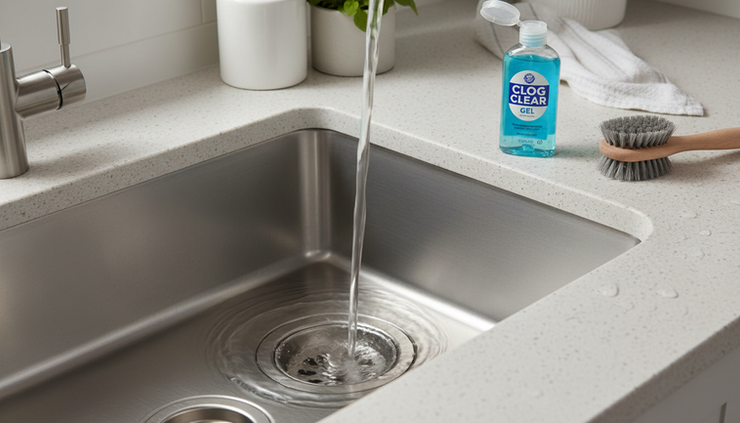
When the wait time is up, flush the drain according to the instructions. Many products call for hot tap water, not boiling water. Boiling water can damage some plastic pipes, seals, or porcelain surfaces.
Run the water long enough to move loosened debris through the pipe. If the drain clears, keep the water running for a short while to help rinse the line.
6. Repeat only if the label allows it
If water still drains slowly, one repeat treatment may help, but only if the bottle says repeating is allowed. If the drain remains blocked after that, stop using chemicals and try a mechanical method or call a plumber.
Prevent future blockages
Prevention is easier than clearing a packed pipe. A few simple habits can reduce buildup.
In the bathroom:
Use a hair catcher in showers and tubs
Clean drain stoppers weekly
Avoid rinsing clumps of hair down the sink
Switch to less residue-heavy soap if buildup is frequent
In the kitchen:
Pour cooled grease into a container and throw it away
Scrape plates into the trash before rinsing
Avoid sending coffee grounds, rice, pasta, and fibrous scraps down the drain
Run plenty of cold water when using a garbage disposal
Once a week, flush drains with hot tap water for a minute. This can help move light buildup before it becomes a serious clog. For homes with frequent slow drains, regular mechanical cleaning with a drain snake or zip tool may be safer than repeated chemical treatments.

What a successful result looks like
After using clog remover gel correctly, water should drain at a steady pace without pooling, bubbling, or gurgling. The drain may not look different from the outside, but the flow will tell you whether the clog has cleared.
Use the product carefully, follow the label, and stop if the blockage does not respond. With the right gel, safe handling, and better drain habits, many common clogs can be handled confidently before they turn into bigger plumbing problems.


Comments